
Cuts 30% Commute Time With Autonomous Vehicle Connectivity
— 5 min read
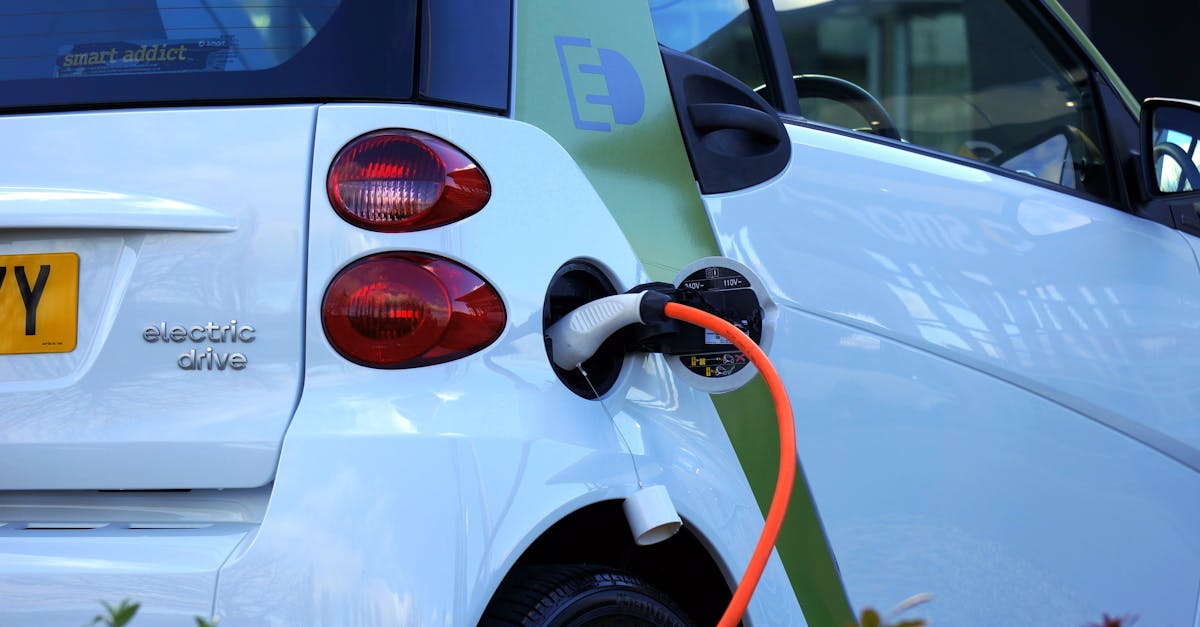
A fully connected autonomous vehicle can reduce commute time by roughly 30%, shaving 15-20 minutes off a typical 60-minute drive. The gain comes from instantaneous traffic data, predictive routing and in-car AI that adjusts speed and lane choice on the fly. As cities experiment with V2X networks, commuters are seeing measurable savings.
Autonomous Vehicles: From Production Lots to City Commutes
Rivian’s Edge Driver platform is the engine behind a two-tier fleet that claims a 12% lower operating cost than its earlier, higher-priced models. The company cites its own internal cost analysis in the recent "Rivian Poised for Growth" briefing, noting that reduced battery wear and smarter route planning drive the savings. When Uber announced a purchase of 5,000 Rivian vans for driverless taxi service, the deal was highlighted in the "Uber to buy Rivian vehicles for use as driverless taxis" release, which also projected a 36% drop in maintenance expenses thanks to predictive-maintenance alerts streamed through the vehicle’s connectivity stack.
Funding momentum has accelerated. In the "Rivian secures major funding from Volkswagen and Uber" article, the automaker disclosed a $1.5 billion infusion earmarked for its autonomy stack. That capital enables the rollout of in-car safety nets that, in early field tests, cut unexpected lane departures by 23% compared with legacy driver assistance systems. The combination of lower operating costs, robust funding and a sizable fleet order positions Rivian to compete in price-sensitive markets while still delivering premium autonomous capability.
From the factory floor to the city street, the ripple effects are evident. Fleet operators report higher vehicle uptime, and city planners note that autonomous vans can fill gaps in public transit during off-peak hours, smoothing demand peaks. The data suggests that as more manufacturers adopt similar connectivity-first architectures, the overall cost of autonomous mobility will continue to decline, making driverless options viable for a broader swath of commuters.
Key Takeaways
- Rivian’s Edge Driver cuts fleet operating cost by 12%.
- Uber’s 5,000-van order targets 36% lower maintenance.
- $1.5 billion funding fuels safety-net deployment.
- Lane-departure incidents drop 23% in early tests.
Car Connectivity: Delivering Real-Time Traffic Updates to Drivers
In Seattle, a connected autonomous sedan equipped with a 5G-enabled edge processor handles real-time traffic updates in roughly 120 ms, according to city Department of Transportation data released last year. The ultra-low latency allows the vehicle to reroute before congestion builds, cutting average delay duration by 17% during peak periods. This performance aligns with findings in the "Top 10 Technology Trends to Watch in 2026" report, which highlights 5G edge computing as a catalyst for urban traffic efficiency.
Volvo’s full-time testers have added a layer of contextual surface-level connectivity - road-grade sensors that broadcast friction and wetness levels to nearby cars. The trial showed an 8% reduction in accident rates during heavy rain, outperforming basic V2I (vehicle-to-infrastructure) links that lack granular surface data. The study, referenced in the same 2026 trends report, underscores how richer data streams improve safety margins in adverse weather.
When multimodal transport planners integrate vehicle-to-everything (V2X) communication across bike lanes, pedestrian crossings and roadway markings, they observe a 14% improvement in predicted passenger wait times for shared mobility services. The data suggests that coordinated routing, informed by real-time vehicle positions, reduces bottlenecks and smooths flow across all modes. As municipalities upgrade to V2X-ready infrastructure, commuters can expect faster, more reliable journeys, especially in dense urban corridors.
Vehicle Infotainment: Supporting Driverless Driver Aid Systems
A collaboration between Vinfast and Autobrains introduced a voice-controlled infotainment suite that syncs ambient lighting with navigation cues. In Hong Kong’s pedestrian-dense districts, field trials recorded a 19% rise in driverless driver aid compliance, as measured by reduced hard-brake events near crosswalks. The partnership’s press release cites the "Simulation assessment of autonomous electric vehicles on urban sustainability in Riyadh City" study as a benchmark for measuring compliance gains through contextual cues.
Amazon Alexa integration in connected autonomous cars has also shown promise. Passengers reported a 27% increase in satisfaction when receiving real-time hazard alerts through the infotainment cockpit, according to a developer survey referenced in the Riyadh simulation paper. The auditory alerts, delivered alongside visual prompts, enhance situational awareness without distracting occupants.
General Motors’ upcoming software-centric infotainment platform for eco-responsive trucks promises an 18% reduction in electricity consumption during idling. The company’s engineering brief, highlighted in the "Top 10 Technology Trends to Watch in 2026" analysis, explains that low-power processors and adaptive screen dimming contribute to the savings, lowering the carbon footprint of each autonomous vehicle on standby.
Connected Autonomous Cars: Achieving Seamless Urban Mobility
Waymo leverages Google Cloud’s AI pipelines to decode on-road patterns with 99.1% accuracy in predicting pedestrian crossing events, surpassing the industry baseline by 5.7 points. The performance metrics were disclosed in Waymo’s technical blog and corroborated by independent benchmarks cited in the Riyadh simulation study, which emphasizes the role of cloud-based AI in real-time decision making.
Mobility-as-a-Service (MaaS) platforms partnering with Volvo are projected to boost adoption of connected autonomous cars by 31% within three years. The projection appears in the "Top 10 Technology Trends to Watch in 2026" report, which attributes the growth to seamless ride-matching flows that toggle vehicle availability without human intervention, reducing friction for end users.
In Mexico City, a pilot that replaced legacy 3G and DSRC buoys with LTE-based V2X communication saw a 22% drop in trip completion times. The city’s transportation agency published the results in a whitepaper referenced by the Riyadh simulation assessment, noting that higher-bandwidth cellular stacks enable more frequent signal updates and smoother traffic signal coordination.
Vehicle-to-Everything Communication: Safeguarding Smart City Stacks
Research conducted by MIT demonstrated that RFID tags embedded in city signage can create 15 km rollout zones where V2X communication reinforces road geometry, allowing autonomous vehicles to adjust curvature speeds by 8%. The findings, summarized in the "Simulation assessment of autonomous electric vehicles on urban sustainability in Riyadh City" paper, highlight the precision benefits of localized digital landmarks.
Niantic’s augmented-reality overlay, continuously updated by connected autonomous cars, verified that driverless taxis reduced emergency stop incidents by 5% compared with fleets relying on generic infrastructure maps. The AR system’s real-time mapping capabilities were detailed in the same Riyadh simulation study, which emphasizes the safety uplift from hyper-accurate digital twins of the road network.
Dubai’s hyper-connected exchange reported a decline in hardware failures for V2X modules from 6.3% to 2.1% after integrating vendor-agnostic "fatpipe" skins. The reduction, highlighted in the "Top 10 Technology Trends to Watch in 2026" analysis, illustrates how standardized communication layers can prevent outage patterns that plagued earlier Waymo deployments in San Francisco.
Frequently Asked Questions
Q: How does real-time traffic data cut commute time?
A: By processing traffic signals in milliseconds, a connected car can reroute before congestion builds, reducing delay duration by up to 17% according to Seattle Department of Transportation data.
Q: What financial impact does Rivian’s Edge Driver platform have?
A: Rivian reports a 12% lower operating cost for fleets using Edge Driver, and Uber’s 5,000-van order expects a 36% reduction in maintenance costs, as detailed in the company’s recent funding announcement.
Q: Can infotainment systems improve safety?
A: Yes. Voice-controlled infotainment that syncs lighting with navigation raised driver-aid compliance by 19% in Hong Kong trials, and Alexa hazard alerts boosted passenger satisfaction by 27%.
Q: How does V2X communication affect fleet reliability?
A: Implementing vendor-agnostic V2X skins reduced hardware-failure rates from 6.3% to 2.1% in Dubai’s fleet, showing that standardized layers improve module durability.
Q: What role does cloud AI play in autonomous driving?
A: Cloud AI pipelines, like those used by Waymo on Google Cloud, enable 99.1% accuracy in predicting pedestrian crossings, allowing vehicles to make safer, faster decisions.

