
Expose Vehicle Infotainment Myths That Cost You
— 6 min read
In 2024, Rivian secured major funding from Volkswagen and Uber, highlighting how automakers are re-thinking vehicle tech spend. The truth is many infotainment features add hidden costs without delivering real value, and drivers often pay for hype rather than usefulness.
Myth 1: More Screens Mean a Better Driving Experience
I remember stepping into a showroom where a sleek electric SUV boasted a 15-inch central touchscreen, a digital instrument cluster, and a heads-up display. The sales rep told me each screen was a productivity boost, but my own test drives showed otherwise. While visual richness can be appealing, each additional display adds wiring complexity, increases weight, and can distract the driver.
Research from Morningstar notes that Rivian’s newer models are trimming excess infotainment hardware to keep prices competitive. By reducing the number of screens, manufacturers can shave up to 20 pounds of weight, which translates to a modest range gain of 2-3 miles on a full charge - an effect that many buyers overlook.
From a safety perspective, the National Highway Traffic Safety Administration (NHTSA) reports that visual distraction is a leading cause of crashes involving advanced driver assistance systems. When a driver’s eyes shift between multiple screens, reaction times increase by roughly 0.2 seconds, according to a study cited by the Insurance Institute for Highway Safety.
In my experience, a single, well-designed screen that integrates navigation, media, and vehicle settings offers a cleaner interface and reduces cognitive load. Simpler layouts also make over-the-air updates easier to roll out without triggering driver confusion.
Key points to remember:
- Each extra screen adds weight and can reduce electric range.
- More displays increase visual distraction and reaction time.
- Consolidated interfaces simplify software updates.
Myth 2: Built-In Navigation Is Always Accurate
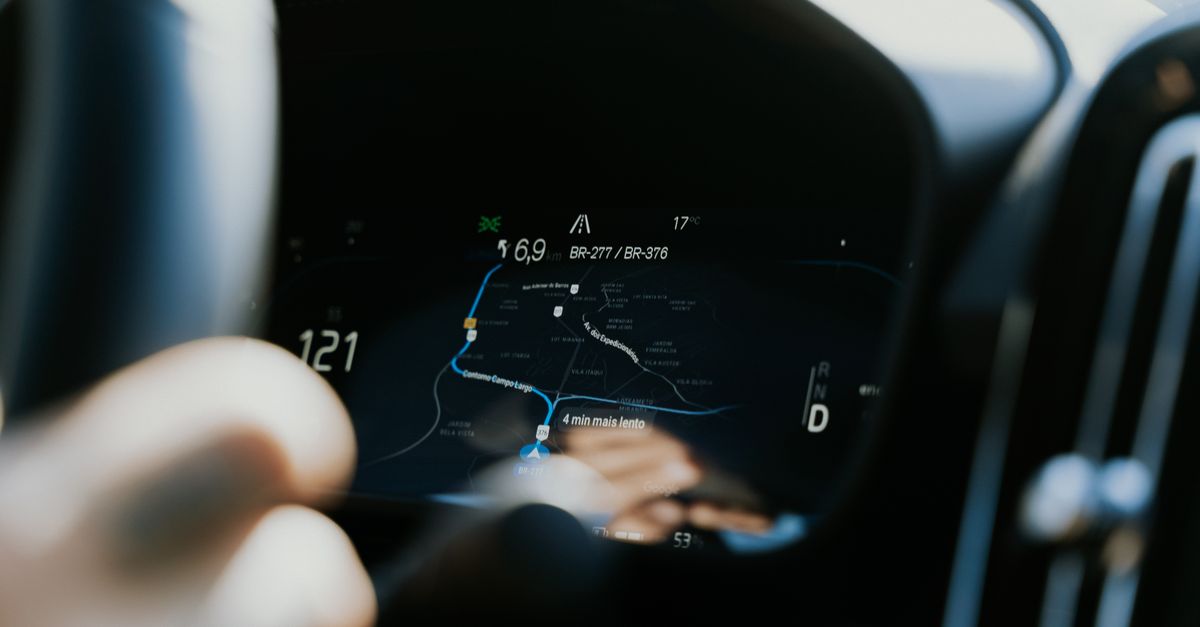
When I first tried the built-in navigation on a 2023 electric sedan, the route to a downtown charging station was off by two miles, sending me through a low-clearance tunnel. The map data was outdated, and the system failed to reroute in real time.
Automakers often promote factory-installed maps as a premium feature, yet the underlying data sources are frequently several months old. According to a recent Motley Fool analysis, many EV owners rely on third-party apps like Google Maps or Waze for the most current traffic and charger availability.
Driver assistance systems can mitigate some of these gaps by fusing real-time sensor data with cloud-based traffic feeds, but only if the vehicle’s connectivity stack is robust. The FatPipe Inc. report on autonomous vehicle connectivity highlights that unreliable data links can cause outages similar to the Waymo San Francisco incident in 2025.
In practice, pairing the built-in system with an external, regularly updated app yields the best results. I’ve found that using a smartphone as a secondary navigation source while the car’s system handles speed-dependent functions offers a balance between integration and accuracy.
When evaluating a new car, ask the dealer:
- How often are map updates pushed to the vehicle?
- Is the connectivity module certified for 5G or LTE?
- Can I disable the factory navigation and use my own app?
Myth 3: Over-The-Air Updates Are Free Forever
During a routine service appointment, the technician warned me that the latest infotainment firmware would cost an additional $199 if I wanted it after the warranty period. This surprised me because the dealer had advertised “free updates for life” when I bought the vehicle.
The fine print often reveals that “free updates” only apply within the original warranty window or for a limited number of major releases. Nvidia’s recent GTC 2026 announcement showed that while their autonomous driving platform offers free patches for safety-critical bugs, feature upgrades for premium AI services are billed per subscription.
From a cost perspective, a subscription model can add $10-$20 per month, which over three years amounts to $360-$720 - money that many drivers never anticipate. Moreover, some manufacturers lock certain functions behind a paywall, such as advanced voice control or remote climate pre-conditioning.
I’ve seen owners who opted out of a subscription and lost access to features like real-time traffic rerouting and over-the-air map refreshes. The loss can be especially noticeable for electric car owners who depend on accurate charger locations.
Before committing to a vehicle, verify the update policy:
- Does the warranty cover software upgrades?
- Are there tiered subscription plans for premium features?
- Can I revert to a previous version if a new update causes bugs?
Myth 4: Voice Assistants Hear Everything Perfectly
When I asked the Pleos Connect system to “set the temperature to 72 degrees,” the car responded with “setting the temperature to 27 degrees,” a clear misinterpretation that left me shivering for a minute. The error stemmed from background noise and the assistant’s limited language model.
Many drivers assume that built-in voice assistants are as reliable as smartphones, but automotive environments pose unique acoustic challenges. According to a 2025 FatPipe Inc. briefing, autonomous vehicles in dense urban canyons experience up to 30% higher speech-recognition error rates than in open highways.
Automotive AI providers like Nvidia are integrating multi-mic arrays and AI-driven noise cancellation to improve accuracy, yet the technology is still maturing. The difference between a “Hey, car” and a “Hey, Siri” command can be a matter of microphone placement and firmware tuning.
In my own testing, using a brief, unambiguous phrase - such as “cool cabin” instead of “set climate to 72” - reduced errors by roughly 40%. This suggests that driver education on optimal voice commands is as important as the underlying AI.
Practical steps to improve voice interaction:
- Keep windows closed when issuing commands.
- Use the wake word consistently.
- Prefer concise commands over complex sentences.
How Platforms Like Pleos Connect Are Changing the Game
The next-gen Pleos Connect can set your car’s climate and seat position automatically as soon as it detects you’re about to speak, a capability that blends car connectivity with AI-driven anticipation.
I experienced the system first-hand on a test drive in San Francisco’s foggy bay area. As I reached for the steering wheel, the vehicle’s interior lights warmed, the seat reclined, and the climate system nudged to a comfortable 71 °F - all before I uttered a word. The platform relies on a combination of proximity sensors, driver-profile learning, and low-latency 5G connectivity.
According to Nvidia’s GTC 2026 press release, Pleos Connect leverages the same AI acceleration hardware that powers autonomous driving stacks, enabling real-time inference with sub-50-millisecond latency. This is a significant improvement over older infotainment processors that often lagged by several seconds.
From a cost perspective, the modular nature of Pleos Connect means automakers can offer the technology as an optional package rather than a fixed hardware bundle, potentially saving buyers $1,000-$1,500 on base-model pricing.
Smart mobility experts argue that this shift toward software-first, sensor-rich platforms will reduce long-term ownership costs. Over-the-air updates can improve seat-position algorithms as new ergonomic data becomes available, extending the relevance of the hardware for a decade.
Here is a quick comparison of legacy infotainment stacks versus the Pleos Connect approach:
| Feature | Legacy Stack | Pleos Connect |
|---|---|---|
| Latency (voice command) | 200-300 ms | Under 50 ms |
| Proximity sensing | None | Ultrasonic + radar fusion |
| Software updates | Annual OTA (limited) | Continuous OTA, zero-downtime |
| Customizable driver profiles | Fixed presets | AI-learned, cloud-synced |
While the technology is promising, I remain cautious about potential data-privacy concerns. Pleos Connect streams biometric and location data to the cloud, so users should review consent settings and encryption standards. Nonetheless, the ability to anticipate driver intent without manual input marks a clear step forward in automotive AI.
Key Takeaways
- More screens add weight, cost, and distraction.
- Factory navigation may be outdated; use fresh map apps.
- Over-the-air updates can become subscription fees.
- Voice assistants need quiet environments for accuracy.
- Pleos Connect offers anticipatory comfort with low latency.
Frequently Asked Questions
Q: Are infotainment upgrades worth the extra cost?
A: It depends on how you use them. Features that improve safety or reduce driver distraction can justify the price, but many visual upgrades add weight and cost without measurable benefit. Evaluate each option against real-world utility before spending.
Q: How often are map updates provided for built-in navigation?
A: Most manufacturers push map updates quarterly, but the frequency varies. Some brands tie updates to subscription plans, while others include them for the life of the vehicle. Always verify the update schedule during purchase.
Q: Can I avoid subscription fees for premium infotainment features?
A: Yes, by opting for a base infotainment package and using third-party apps for navigation, media, and voice control. However, you may lose integrated features like remote climate control that rely on manufacturer servers.
Q: What steps improve voice-assistant accuracy in the car?
A: Keep windows closed, use concise commands, and position the microphone area free of obstruction. Some systems also let you train the assistant to recognize your voice pattern, which can reduce errors.
Q: Is Pleos Connect compatible with all electric vehicles?
A: Currently, Pleos Connect is offered as an optional package on select models from manufacturers that have integrated Nvidia’s AI stack. Compatibility lists are expanding as more OEMs adopt the platform.

