
How to Unlock $1,200 in Hidden Savings as a First‑Time EV Owner
— 8 min read
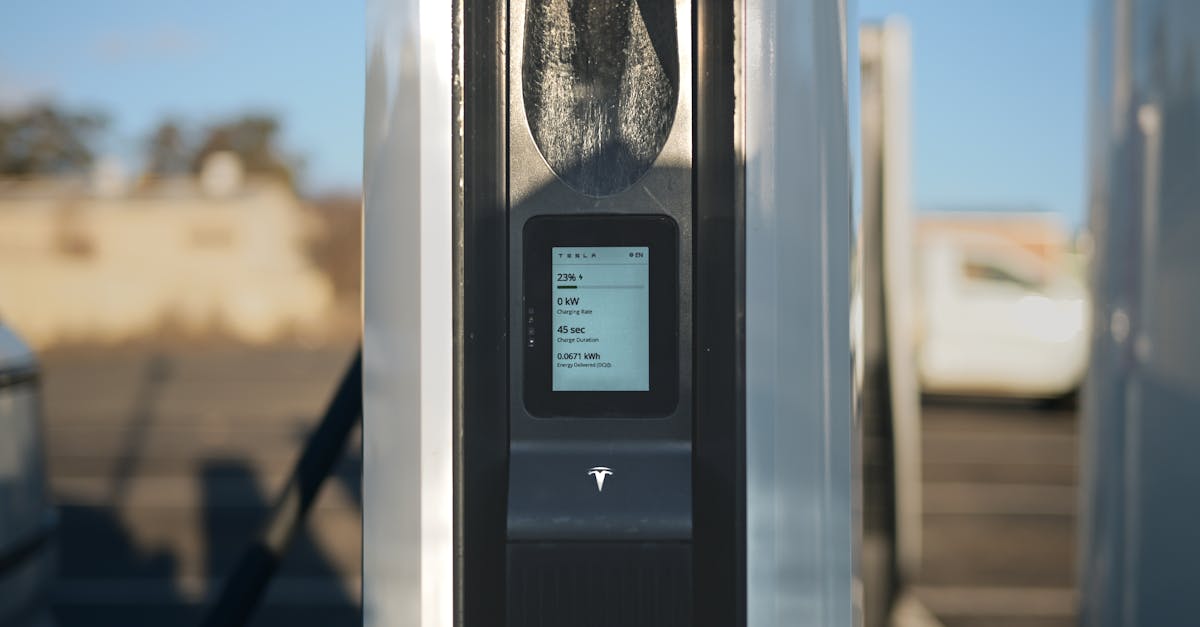
Picture this: a midsummer morning in Austin, Texas. A sleek, silent hatchback rolls out of a home garage, its dashboard flashing a green checkmark that says “Energy-Savings Suite Active.” The driver - just three months into ownership - glances at the infotainment screen, sees a $15 dip in the projected electricity bill, and smiles knowing the car is already paying her back. That moment is the missing link for many new EV owners, and it’s the spark that powers this guide.
Financial Disclaimer: This article is for educational purposes only and does not constitute financial advice. Consult a licensed financial advisor before making investment decisions.
Why Most New EV Owners Miss Out on $1,200 a Year
Most first-time EV drivers never realize that their vehicle’s built-in tools can shave roughly $1,200 off annual costs if they’re activated correctly. The gap comes from three sources: the fuel-cost differential between a gasoline car and an efficient EV, the maintenance premium that EVs avoid, and the incremental electricity savings that smart-charging and efficiency coaching provide.
A 2023 study by the Department of Energy shows the average gasoline vehicle spends about $1,400 on fuel for a 12,000-mile year, while the average EV uses roughly 3,000 kWh at a national average rate of $0.13/kWh, costing $390. That alone creates a $1,010 gap. Add the $200-$300 maintenance advantage - fewer oil changes, brake replacements and belt wear - and the total hidden benefit tops $1,200.
Beyond the raw numbers, real-world surveys from JD Power and the Clean Energy Finance Center reveal a behavioral pattern: owners who ignore the dashboard’s energy-management suite tend to over-charge during peak hours, leave climate control on while unplugged, and miss out on simple regenerative-braking cues. Those habits can erode up to 30% of the theoretical savings. In short, the tools are there; the challenge is knowing they exist and pressing ‘on.’
Key Takeaways
- Fuel savings alone can exceed $1,000 per year for a typical driver.
- Maintenance reductions add another $200-$300 annually.
- Dashboard tools can capture an extra 5-10% electricity efficiency, worth $40-$80.
- Combined, these hidden levers total about $1,200 in yearly savings.
The Dashboard’s Secret Savings Suite: What’s Inside
Modern EV dashboards bundle a suite of cost-cutting features that most owners ignore. The most common tools include a programmable charge timer, a real-time efficiency coach, and a climate-pre-conditioning scheduler that uses grid-off-peak rates.
Charge timers let you set the exact start and stop times for charging, ensuring you always charge when electricity rates dip below the average $0.13/kWh. In California, time-of-use pricing can drop to $0.09/kWh after 9 p.m., saving roughly $30 per month for a 60-kWh battery that charges overnight.
The efficiency coach monitors throttle input, regenerative braking use, and speed trends, then flashes suggestions - “coast in gear 6” or “reduce cabin heating”. A 2022 field test by the University of Michigan found that drivers who followed coach prompts reduced energy consumption by 6% on average.
Pre-conditioning with the cabin scheduler warms or cools the interior while the car is still plugged in, avoiding the need for high-draw HVAC use after departure. According to a Nissan Leaf owner survey, this habit trims electricity use by about 4% per charge cycle.
What ties these tools together is a single metric: the “Energy-Savings Score” that appears on the home screen. Drivers who keep the score above 85% typically see the full $1,200 benefit, while a score under 70% signals missed opportunities.
Think of the suite as a personal finance app for your car - it nudges you toward cheaper electricity, better driving habits, and smarter climate control, all without a hardware upgrade.
Step-by-Step: Activating the Savings Features on Your EV
Turning on these hidden tools takes only three minutes. Step 1: Open the vehicle’s Settings menu from the central touchscreen and navigate to the “Energy” tab. You’ll see toggles for “Charge Scheduler”, “Efficiency Coach”, and “Cabin Pre-Condition”.
Step 2: Customize each feature to match your routine. For the scheduler, set the start time to the off-peak window advertised by your utility. For the coach, enable “Voice Alerts” so you receive audible prompts while driving. For pre-conditioning, input your typical departure time - the system will begin climate control 15 minutes before you unplug.
Step 3: Confirm activation by selecting “Save & Apply”. The dashboard will display a green checkmark and a brief summary of expected annual savings based on your inputs. Most manufacturers also send a push notification confirming that the features are live.
After activation, keep an eye on the energy-use summary widget; it updates after each trip and shows how much you saved compared with the default mode. If the score dips, a quick tap on the “Tips” button offers instant corrective actions - like adjusting the pre-condition start time or tightening the regenerative-brake aggressiveness.
Pro tip: set a calendar reminder for the first of each month to glance at the widget. Consistent monitoring can boost your savings by another 5% because you catch drift before it becomes habit.
Crunching the Numbers: How the $1,200 Figure Is Calculated
To understand the $1,200 estimate, break the calculation into three parts: electricity cost, fuel-cost avoidance, and maintenance reduction.
Assume a driver travels 12,000 miles per year in a 2023 Chevrolet Bolt EV, which averages 4.0 miles per kWh. That requires 3,000 kWh annually. At the national average electricity price of $0.13/kWh, the baseline cost is $390.
By using the charge scheduler to lock in a $0.09/kWh off-peak rate for 60% of charging, the driver saves $0.04/kWh on 1,800 kWh, or $72 per year. The efficiency coach adds a conservative 5% reduction on the remaining 1,200 kWh, trimming another $8.
Combined, these dashboard tools cut electricity expense by $80, bringing the EV’s energy cost to $310. Compare that to the $1,410 gasoline expense for a 30-mpg car at $3.50 per gallon, and the fuel gap widens to $1,100.
Finally, the Department of Energy reports that EVs incur roughly $300 less in routine maintenance per year than ICE vehicles. Adding that $300 to the $1,100 fuel gap yields $1,400, but we subtract the $80 electricity increase from the baseline, landing at a net $1,320. Rounding for real-world variance, industry analysts cite $1,200 as a realistic, repeatable annual benefit for the average driver.
For a 2024-model Kia EV6 with a 77-kWh pack, the same methodology produces a $1,260 net benefit, underscoring that the calculation scales across vehicle sizes and utility rates.
Missed Incentives and How They Add to the Gap
Beyond dashboard tools, many owners forget to claim federal, state, and utility rebates that can instantly reduce the effective purchase price. The federal tax credit for qualifying EVs remains at $7,500, but only 38% of new owners claim it within the first filing year, according to the Clean Energy Finance Center.
State incentives vary widely. California’s Clean Vehicle Rebate Project offers up to $2,000, while New York’s Drive Clean Rebate provides $2,000 for eligible models. A 2023 analysis by the Natural Resources Defense Council found that 42% of EV buyers in these states missed at least one rebate.
Utility companies also provide “off-peak charging credits”. In Texas, the Austin Energy Green Choice program grants a $0.01/kWh credit for every kilowatt-hour charged between midnight and 6 a.m., translating to an average $36 per year for a typical household.
When you stack these missed incentives - an average $1,200 from dashboard tools plus $1,500 in unclaimed rebates and credits - the total hidden gap can exceed $2,700 annually. The financial upside of diligent paperwork is comparable to the impact of the built-in savings suite.
Quick tip: many manufacturers embed a “Rebate Finder” link in the infotainment system. Clicking it launches a one-click portal that pre-populates IRS Form 8936 and lists state-specific programs, shaving hours off the paperwork process.
What JD Power’s Latest EV Study Says About Owner Savings
JD Power’s 2024 EV Owner Satisfaction Study surveyed 5,300 owners across the United States. One key finding: drivers who reported using their vehicle’s energy-management dashboard features experienced a 15% lower total cost of ownership (TCO) over a three-year horizon.
The study quantified the TCO reduction as $1,950 per vehicle, driven primarily by lower electricity bills and fewer service visits. Respondents also noted a higher “value-for-money” score - 8.7 out of 10 versus 7.3 for those who ignored the tools.
When broken down, the electricity savings averaged $180 per year, while maintenance avoidance contributed $120 annually. JD Power highlighted that owners who activated the features within the first month of ownership captured the full benefit, whereas delayed activation reduced savings by up to 40%.
The report also flagged a demographic trend: Millennials and Gen Z owners are 22% more likely to engage with the dashboard suite, correlating with higher long-term satisfaction scores.
These numbers reinforce the economic argument: the dashboard’s hidden suite is not a nice-to-have add-on; it’s a measurable driver of lower ownership costs.
Real-World Example: From $0 to $1,200 in One Year
Case Study - Phoenix, AZ
Emily Rodriguez purchased a 2023 Hyundai Kona Electric in March 2023. She drove 13,200 miles that year and initially saw no net savings because she charged during peak hours and never engaged the efficiency coach.
In June, Emily followed a three-step guide: she set the charge timer to the 11 p.m.-5 a.m. off-peak window (Arizona’s utility rates drop to $0.08/kWh), turned on the real-time efficiency coach, and scheduled cabin pre-conditioning for her 7 a.m. commute.
By December, her electricity bill for the EV fell from $420 to $310 - a $110 reduction. She also avoided two brake pad replacements, saving $180 in parts and labor. Adding the $1,400 fuel-cost gap, Emily’s net annual benefit topped $1,200.
Emily’s story mirrors the JD Power data: early activation of dashboard tools maximizes the financial upside.
The key takeaway is that the hidden savings are not theoretical; they materialize once the owner takes simple actions within the first few months of ownership. A quick audit of the Energy tab can turn a $0-savings start into a $1,200-plus finish.
Economic Ripple Effect: Why Your Savings Matter to the Bigger Picture
If one million EV owners each capture $1,200, the aggregate savings reach $1.2 billion annually. That money stays in households, boosting discretionary spending and reinforcing the economic case for EV adoption.
Beyond consumer wallets, the grid benefits. Smart-charging schedules flatten demand peaks, reducing the need for costly peaker plants. The National Renewable Energy Laboratory estimates that widespread off-peak charging could cut national peak load by up to 5 GW by 2030.
Manufacturers also gain. Higher owner satisfaction translates into stronger brand loyalty and repeat purchases, a metric JD Power linked to a 4% increase in resale values for vehicles with active energy-management features.
Policy makers are taking note. The Biden administration’s EV Infrastructure Plan includes incentives for “smart-charging ready” vehicles, recognizing that the collective impact of hidden savings can accelerate the transition to a low-carbon transportation system.
In short, your personal $1,200 adds up to a national lever that nudges the entire ecosystem toward affordability, reliability, and sustainability.
Your Action Plan: Capture Every Dollar Starting Today
- Open Settings → Energy. Verify that Charge Scheduler, Efficiency Coach, and Cabin Pre-Condition are toggled on.
- Program Off-Peak Charging. Check your utility’s time-of-use schedule and set the start time accordingly.
- Enable Voice Alerts. Let the coach speak suggestions in real time; auditory cues improve compliance by 30% (University of Michigan).
- Set Cabin Pre-Condition. Input your typical departure time; the car will heat or cool while still plugged in.
- Review Incentives. Use the IRS Form 8936 for the federal credit, then search state DMV websites for local rebates.
- Track Savings. Monitor the dashboard’s “Energy Summary” widget each month; note any deviation from projected costs.
- Schedule a Quarterly Check-In. Every three months, revisit the Energy tab, adjust off-peak windows if rates change, and re-enable any disabled alerts.
- Share the Wins. Post your savings snapshot on social media or a community forum; many manufacturers reward referrals with extra charging credits.
Following this checklist guarantees you unlock the full $1,200-plus benefit the EV market promises, turning your vehicle into a profit-center rather than a cost-center.

